
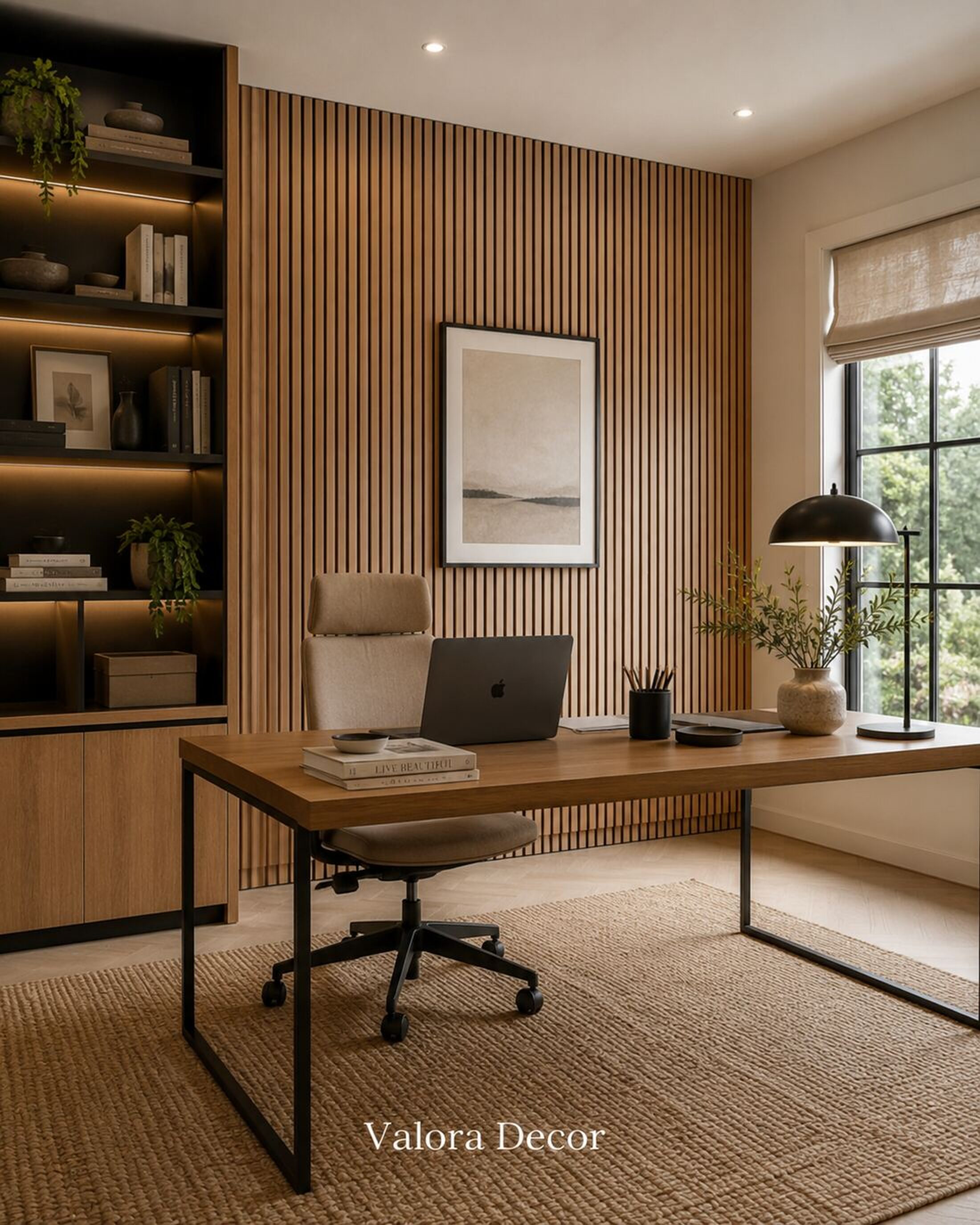
Why it works in an office
- A better background: vertical slats are calm and consistent on camera, with no clutter and no bare drywall.
- Less echo: home offices often have hard floors and little soft furniture. Felt-backed panels absorb some reflections, so your voice sounds clearer. (They don't soundproof the room. See do acoustic slat panels work.)
- Warmth: wood makes a small room feel finished and less like a spare bedroom.
Layout ideas
Behind the desk (camera wall) The most popular choice. Cover the wall behind your chair, or a section about 6–8 ft wide centered on your seat: 3–4 panels.
Behind the monitor Covering the wall your desk faces adds absorption in front of you, where your voice hits first. It's useful if you take a lot of calls.
Both For the biggest sound improvement, panel the wall behind you and the one in front of you.
Lighting for calls
- A warm COB LED strip along the edges of the panel section adds depth on camera without glare.
- Keep your main light source in front of you, not behind.
- See slat wall LED lighting.
Finish choices for offices
- Walnut: executive and warm. It looks rich on camera.
- Light Oak: bright and calm, and it doesn't darken a small room.
- Grey Oak: modern and neutral, good with black and white furniture.
Cost example
A 10 ft wall behind the desk takes 5 panels: $345 at $69 each, plus trim and any lighting. Use the panel count chart for other sizes.
Commercial offices
We also supply offices, conference rooms and reception areas. For larger projects, ask about trade and volume pricing.