
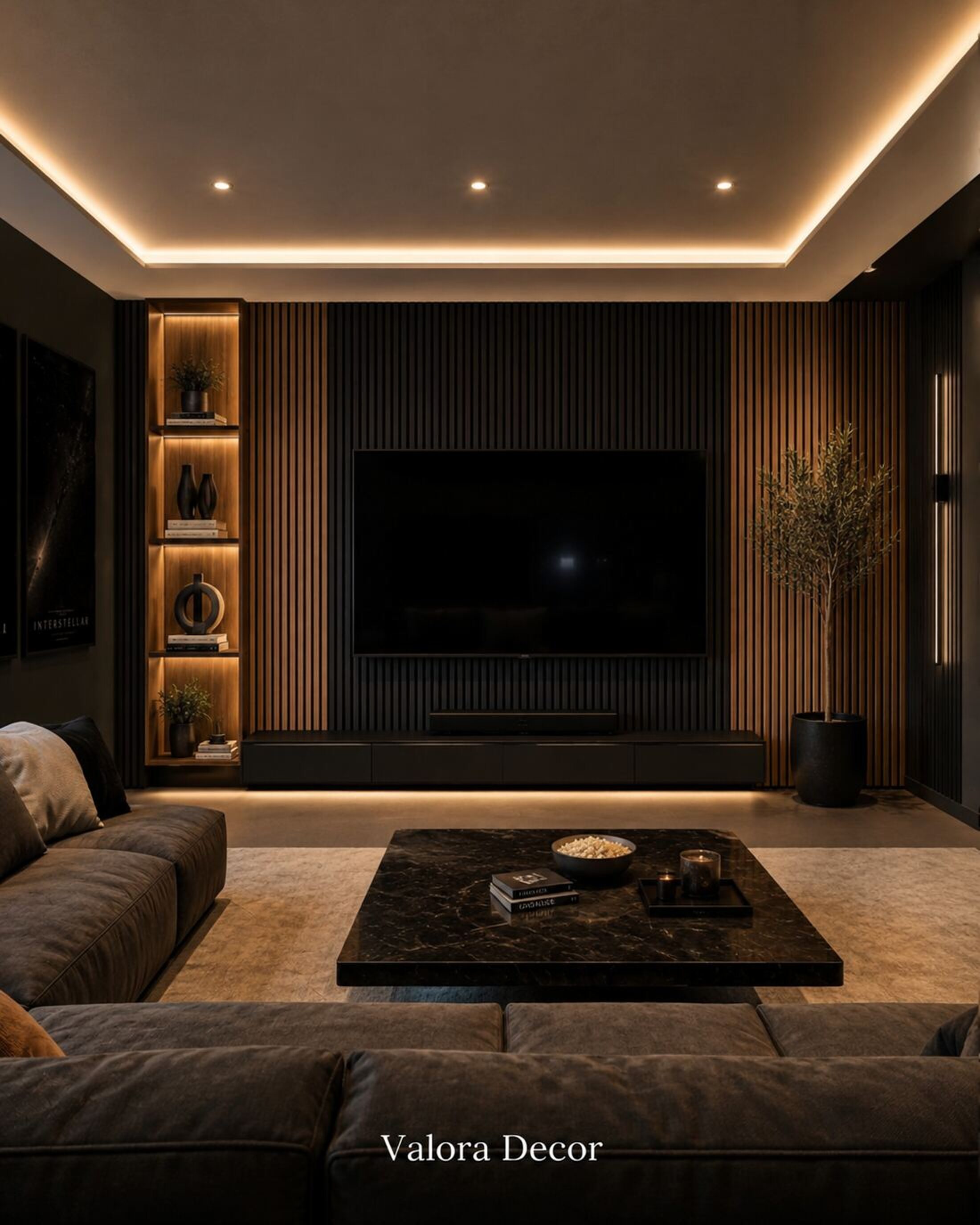
Why COB LED strip?
Regular LED strips have individual diodes spaced along the tape. When they reflect off a surface, you can see a row of dots. COB (chip-on-board) strip places the chips so close together that the light reads as one continuous line, with no visible dots. Behind slats and in coves, that makes a big difference.
We stock COB LED strip by the foot, from $2.33/ft. See COB lighting.
Where to put the light
- Behind the panel edges: a glow that outlines the panel section, popular around TVs and headboards.
- In a slat gap: a vertical line of light that looks built in.
- Top or bottom wash: strip at the ceiling or floor line, washing light across the slats so the texture stands out.
- Shelving and niches: if your slat wall includes shelves, light under each shelf.
Planning the wiring
- Decide where the power comes from. You'll need an outlet or a hardwired power supply (driver) near the wall.
- Pick the switch type: wall switch, remote dimmer, or smart controller.
- Mount the panels on battens if you can. The gap behind the panels makes routing wires much easier.
- Use an aluminum channel for a cleaner line and better heat management, especially in slat gaps.
- Check local electrical code. Hardwired drivers and in-wall wiring may need a licensed electrician.
How much strip do I need?
Measure each line you want lit and add them up. A 10 ft wide feature wall lit along the top edge needs about 10 ft of strip. Lighting both vertical edges of a 9.5 ft panel section adds 19 ft.
Color temperature
- 2700K–3000K (warm white): pairs best with walnut and oak
- 4000K (neutral white): cleaner, more modern, good with grey oak
- RGB: fun for media rooms and gaming setups, less common in living spaces