
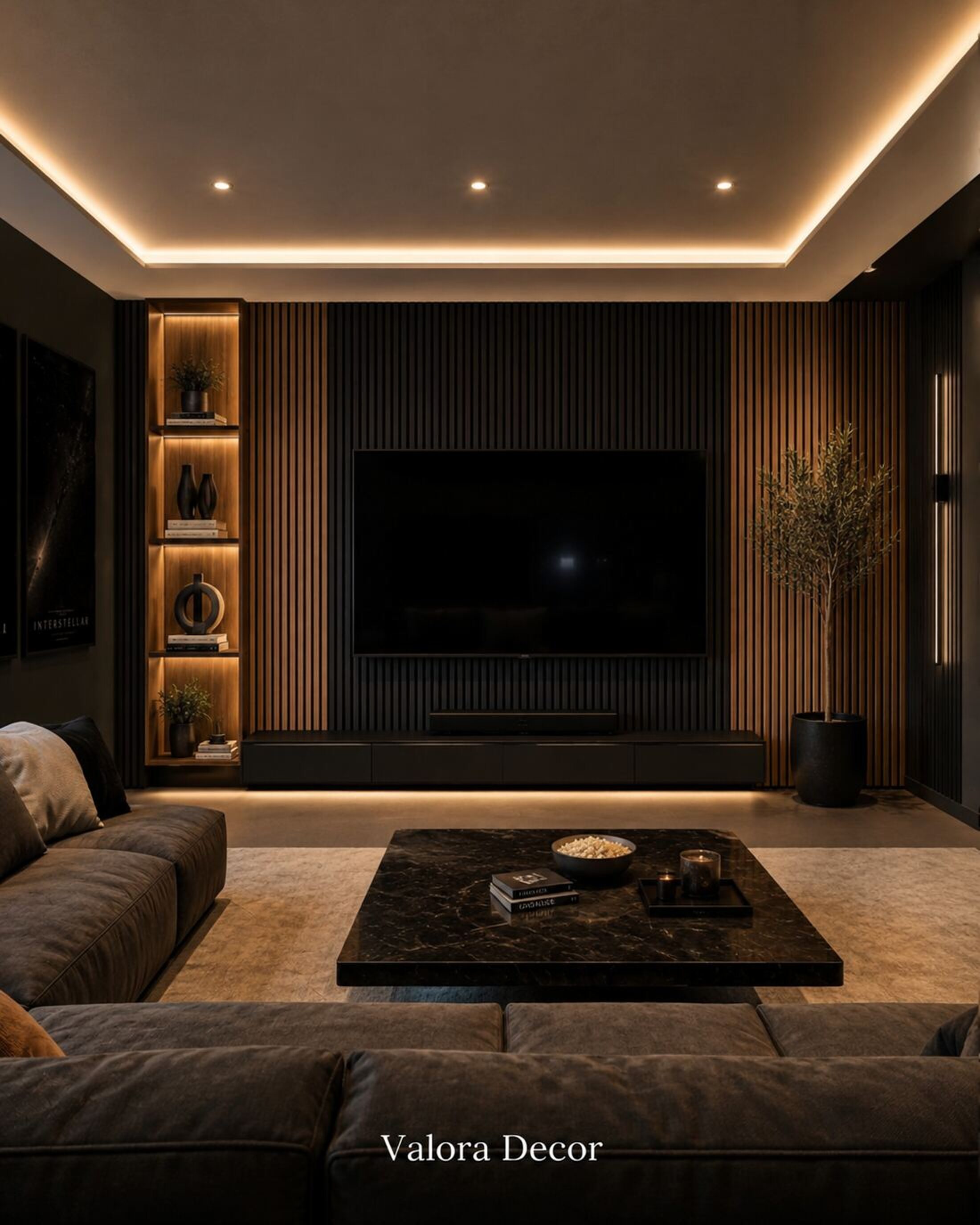
Why put slats on the ceiling?
- Sound: a hard ceiling is one of the biggest sources of echo, especially in rooms with tall or vaulted ceilings. Covering part of it can calm a room noticeably.
- Look: a wood slat ceiling adds warmth and makes a room feel designed. It's popular in kitchens, entryways, offices and restaurants.
- Continuity: running slats up a wall and across the ceiling creates a dramatic wrap effect.
Fixing: the most important part
On a wall, gravity holds the panel against the surface. On a ceiling, gravity pulls it away. That means:
- Mechanical fixings are a must. Screw into joists or into battens fixed to the joists. Don't rely on adhesive alone.
- Two people at least. A 9.5 ft panel is awkward overhead. Panel lifts or T-supports help.
- Plan around fixtures. Mark recessed lights, smoke detectors, vents and sprinklers before you start, and cut openings carefully.
- Check local code for any ceiling finish in commercial spaces.
If you're unsure, a ceiling install is a good job for a professional. Ask us for a free installation quote.
Layout tips
- Run slats along the longest dimension of the room to make it feel bigger.
- A slat "cloud" over a dining table or desk, rather than the whole ceiling, adds warmth and sound absorption with fewer panels.
- Wrapping from wall to ceiling? Line up the slats at the corner so the rhythm continues.
Lighting a slat ceiling
COB LED strip in slat gaps or around the edge of a slat cloud gives a clean, dot-free line of light. See slat wall LED lighting.