
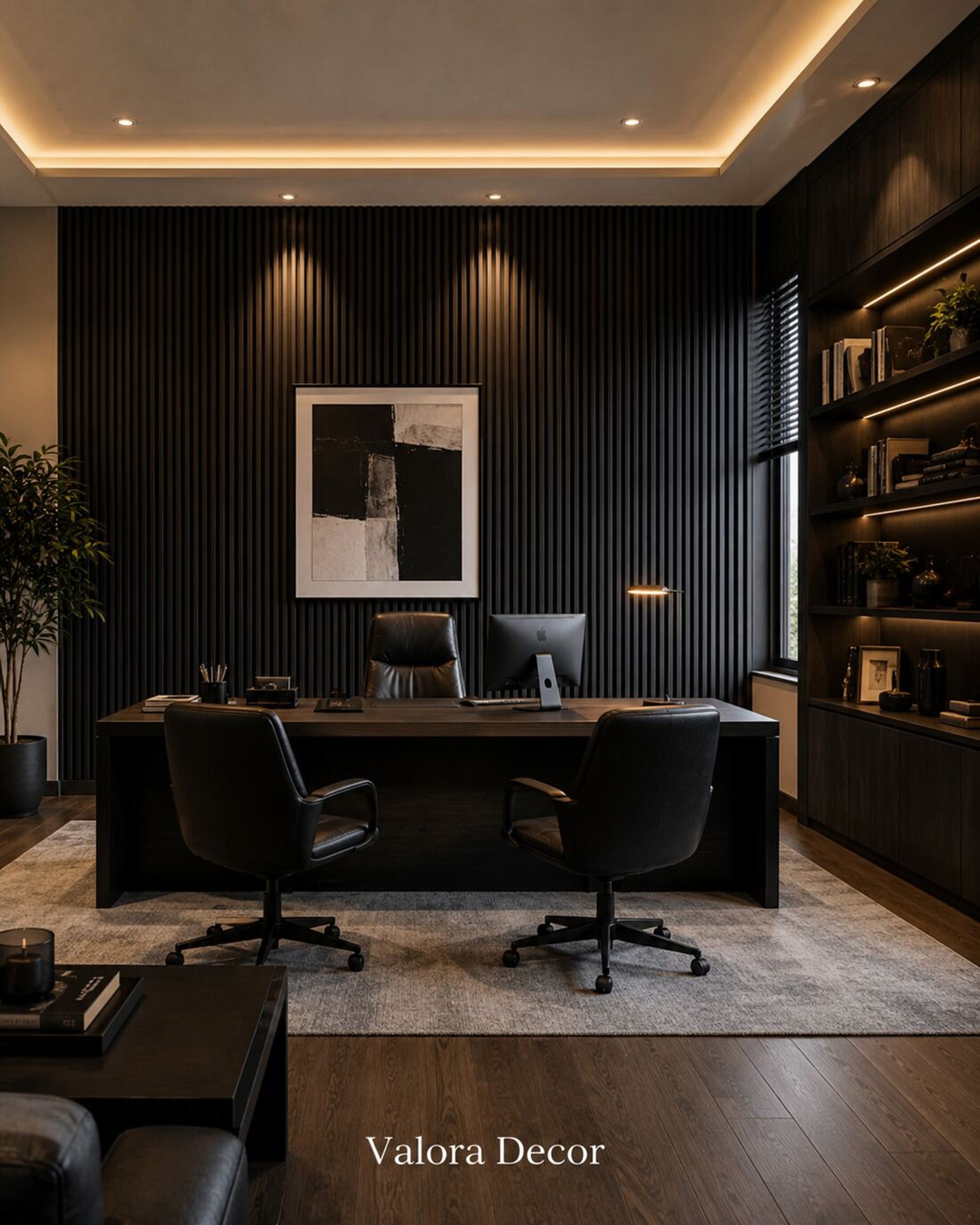
What acoustic slat panels do
Hard surfaces like drywall, glass, tile and hardwood floors bounce sound around a room. That's why an empty or minimalist room sounds loud and "echoey."
Acoustic slat panels have wood slats over a felt backing. Some sound passes through the gaps between slats into the felt, where part of it is absorbed instead of reflected. The result:
- Less echo and reverberation
- Clearer speech in living rooms, offices and on video calls
- A calmer-sounding room with hard floors or high ceilings
How much difference you hear depends on how much of the room you cover, the size of the room, and what else is in it (rugs, curtains, soft furniture).
What they don't do
Acoustic panels are not soundproofing. They won't stop your neighbor's TV, traffic noise, or sound from a home theater reaching the next room. Blocking sound between spaces needs mass, sealed gaps and decoupled walls, built into the construction.
If someone promises that decorative panels will "soundproof" a room, be skeptical.
Where they make the biggest difference
- Home offices: fewer reflections on video calls
- Living rooms with hard floors and open plans
- Media rooms: less slap echo off bare walls
- Restaurants, offices, salons and reception areas: busy rooms with hard surfaces
How to get more absorption
- Cover a larger area, or panel two walls instead of one.
- Mount on battens to leave an air gap behind the panels. A gap can improve absorption, especially at lower frequencies.
- Combine panels with rugs, curtains and upholstered furniture.
Acoustic slat panels vs. foam panels
Foam absorbs well but looks like a studio. Slat panels trade some absorption for a finished, furniture-grade look. See acoustic slat panels vs. foam.
Are they worth it?
If you want a wall that looks great and makes the room sound calmer, yes. If your only goal is maximum absorption at the lowest cost, purpose-built acoustic panels may suit you better. If you need soundproofing, talk to a contractor about wall construction.